
Resources
Please review the resources provided below and reach out to our office to schedule a time to meet if you would like to further review any of the resources provided.
Please read before reviewing any links:
All sites listed are listed for convenience and educational purposes. They are not an endorsement by the University. Please make sure to review all privacy policies for each website you use. Some will collect your information and make it available to others. Some use cookies. You determine which sites you want to access and what information you wish to share. If you find a broken link, please send an email to careerservices@daemen.edu along with which tab you found the broken link under. Note: No additional resources will be added to this section at this time.
Career Exploration Resources
- My Next Move is designed to help job seekers and students search and explore career options.
- The Occupational Outlook Handbook is the government's premier source of career guidance featuring hundreds of occupations.
- Career OneStop provides tools to help students and job seekers research salaries, identify training programs, and match their skills with professions.
- Learn How To Become is a career guidance website dedicated to helping individuals choose career paths, find educational programs, and navigate the job market.
Resume and CV
- What is the difference between a Curriculum Vitae (CV) and a resume? A resume is a concise snapshot highlighting specific skills and work history relevant to a specific job. In contrast, the CV is an in-depth, comprehensive document detailing your complete academic and professional history. Both documents must provide a persuasive account of your specific skills and experiences as they relate to the specific job. Differences between the two documents are further described in this resource document.
- The Resume Overview and Quick Tips document provides tips and tricks for crafting your resume.
- The Action Words document and Quick Tips for Writing Impactful Bullet Statements document can assist with writing the bullet statements on your resume/CV.
Cover Letter
- A cover letter is your formal introduction to a hiring manager and its purpose is to bridge the gap between your qualifications and the job requirements. While your resume outlines what you've done, your cover letter explains why you are the perfect fit for the specific role. It connects the dots between your experience and the employer's needs.
- The Cover Letter Overview and Quick Tips document provides helpful tips for crafting cover letters.
References Page
- A reference list is a separate professional document containing the contact information of people who can speak to your character, skills, and work ethic. As you near the final stages of the hiring process, employers will often ask for a list of professional references.
- The Reference Sheet Formatting Resource and Reference List Quick Tips Guide are two helpful resources for crafting your references list.
Check out this video to learn more about how Career Services can help with crafting your professional documents.
Job and Internship Search
- Handshake aka WildcatWorks is Daemen University's hub for jobs and internships, career-related event information, and scheduling appointments with your career advisor.
- Indeed is the world's largest job search engine and hiring platform.
- LinkedIn Jobs allows job seekers to discover open roles, research companies, and apply for positions using their professional profile.
- College Grad Job Hunter is a resource for finding jobs across different industries.
- GlassDoor provides insight for job seekers on company reviews, salary data, and available jobs.
- Talent.com is a global job search platform that centralizes millions of job listings from across the web.
- Zippia is an AI-powered career research and job discovery platform designed to help job seekers find, apply for, and research jobs.
- ZipRecruiter is a job search engine and hiring platform.
- Buffalo Niagara Jobs highlights opportunities in Western New York.
- WNY Jobs highlights opportunities in Western New York.
- Small Business Jobs Western New York highlights jobs with small businesses across Western New York.
- Government Jobs is a resource to search and apply for local government jobs for city, county, and state agencies.
- NYS Department of Civil Service Job Seekers provides access to important resources including civil service examination announcements, featured programs, and information regarding current job vacancies in New York State.
- Peace Corps showcases volunteer opportunities with the Peace Corps.
- USAJOBS showcases positions with the federal government.
Networking
- Your elevator pitch is your 30-60 second professional introduction that you may use at networking events or with virtual introductions. This resource provides tips for crafting your personalized elevator pitch.
- Networking 101: Handshake Blog dives into 5 steps to build your career connections.
- LinkedIn is the largest professional networking site, with more than 1 billion members. It is a virtual "resume" that includes details of your education, professional interests, skills, and previous experience. LinkedIn allows you to manage your professional online identity, build your network, explore career options, and view the profiles of professionals in your field. Review the LinkedIn Profile Checklist as you build your profile.
- Handshake aka WildcatWorks allows you to network and connect with employers.
Salary Research Tools
- Bankrate's Cost of Living Calculator can assist with comparing the cost of living in two cities.
- How to Negotiate Salary reviews tips and tricks for salary negotiation.
- MoneyGeek has numerous personal finance and comparison tools.
- The National Association of Colleges and Employers (NACE) has numerous articles showcasing salary research.
- PayScale is a tool for researching salary benchmarks, negotiating pay, and understanding market trends.
- Salary Expert draws on Economic Research Institute's expertise in salary and cost-of-living data to provide tools for evaluating careers, relocation, and education decisions.
- The Salary Relocation Calculator on Salary.com can assist with comparing the cost of living in your current location to the cost of living in a new location.
- College Gradprovides information about understanding your job offer benefits package.
- US Department of Labor and Bureau of Labor Statistics has numerous resources for salary data by location and industry.
- ZipRecruiter provides comprehensive salary data for jobs across all industries.
The Interview
An employer's decision to extend a job offer to you is based on many variables, some of which you may never know. The questions you are asked in an interview typically address these 3 areas:
- Can you?
- Will you?
- Do you fit?
The interview gives you an opportunity to talk about your previous hard work, your career goals, and your aspirations.
Behavioral Interviewing
Behavioral interviewing is an interviewing technique that helps employers predict how a candidate will perform on the job and fit into the organization. The theory behind this type of interviewing is that the most accurate predictor of future performance is past behavior in a similar situation. By finding out what actions you took and/or how you reacted in past situations, the employer gets a sense for how you will probably respond to circumstances in the position they are considering you for.
Why do Employers use Behavioral Interviewing?
This technique provides employers with objective information that they don't get from a traditional interview question. For example, if an employer asks, "Do you work well with people from diverse cultures?" your response will most likely be "yes." If the employer says, "Tell me about a time when you had to work with people from diverse cultures," you will respond with a story about a situation where this was the case. The employer will then be able to judge whether you actually do perform well, according to their standards. This also gives you the opportunity to prove by example that you can handle the task at hand.
How to Prepare:
- Refresh your memory about your achievements and highlights of both your school and work careers over the past few years.
- Consider how you handled challenging problems or obstacles and be able to summarize the outcomes.
- Demonstrate past behaviors by drawing on many experiences: internships, classes and projects, activities, sports participation, community service, and full or part-time jobs.
- Decision-making, leadership, organizational skills, problem-solving, and team-building are among the many topics that behavioral questions probe into, so any experiences which involve these areas would be good to use as behavioral examples.
Check out these interview preparation resources and tools below:
- The Interview
- Mastering the Interview: Quick Tips
- Tips for Answering "Tell Me About Yourself" In An Interview
- Behavioral Interviewing Using the STAR Method
- Transferable Skills
- Questions to Ask Employers During Interviews
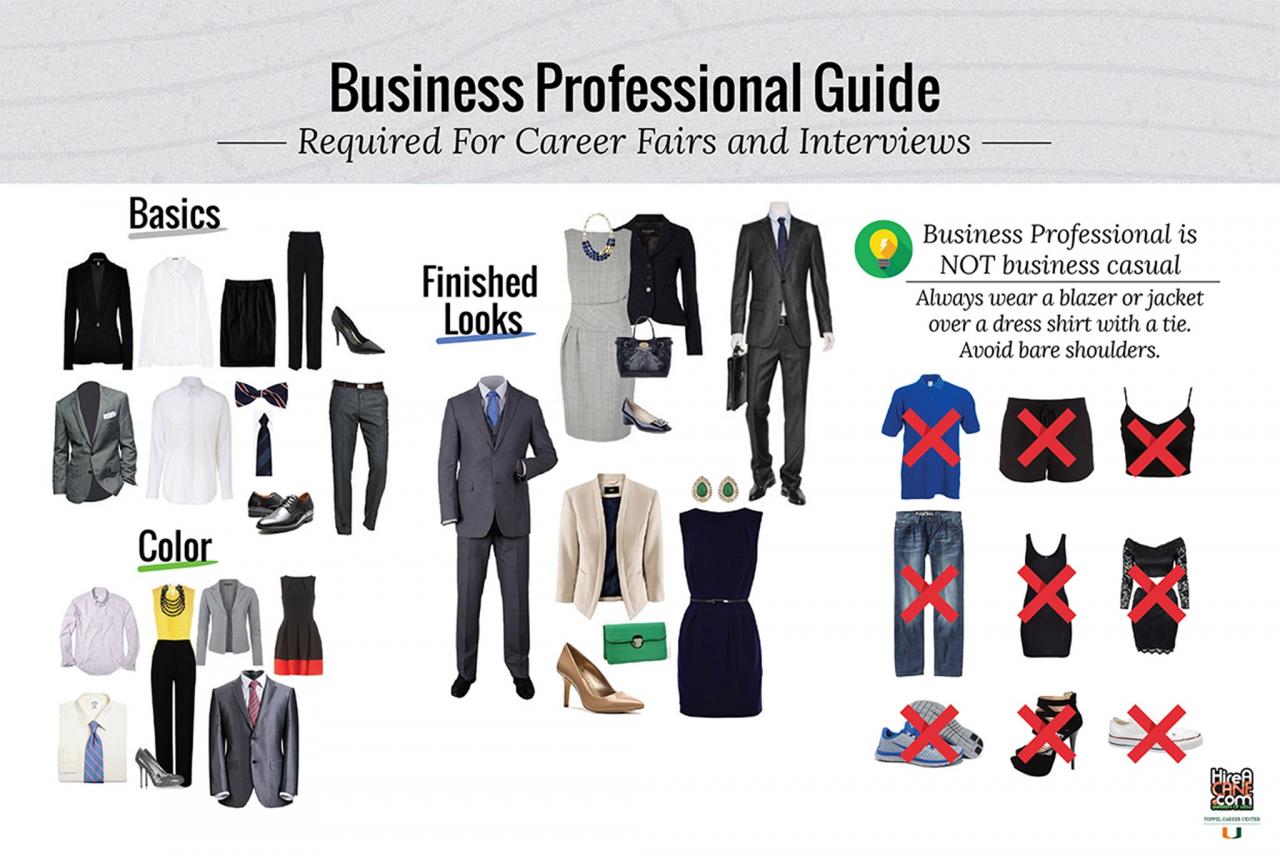
Dress for Success
You are not only being evaluated by what you say in an interview but how you present yourself. Dressing professionally is essential for creating a favorable impression.
Thank You Letter
It is a good practice to send the interviewer a thank-you letter within two days after the interview, thanking them for their time and consideration. Consider including the following in your letter:
- Remind the employer of the interview and the qualifications you possess which are especially significant to the position.
- Share your afterthoughts as a way of supplying important information that may have been left out of the interview.
- Communicate your continued interest in the position and that you would like to work for the organization.
Be sure to obtain the correct name, title, and address of the interviewer(s) so that you can properly address your thank you. You should ask for business cards from the interviewers at the end of the interview. If time permits, mailing a letter or handwritten thank you note always makes a good impression. However, an email thank you message works when an employer is making an immediate hiring decision.
General Resources
- Accredited Schools Online helps you explore online degree options.
- GoGrad helps you explore online degree options.
- GradSchools.com helps you find graduate degree programs from our thousands of accredited graduate schools.
- GraduateGuide will help you find colleges and universities that offer graduate programs that interest you.
- Magoosh is a resource for preparing for the Graduate Record Examination (GRE).
- Peterson's Guide provides information on test preparation and graduate schools.
- US News and World Report, Best Graduate Schools helps you unlock comprehensive data, rankings, and interactive tools to help you choose the right graduate program.
Graduate School Timeline
Sophomore/Junior Year
- Define career goals and determine if graduate school is right for you
- Explore and research graduate programs for your field of study
- Visit graduate school websites to learn more about:
- Program requirements
- Application deadlines
- Identify potential writers for letters of recommendation
- Review your unofficial transcripts to check for any discrepancies
- Begin drafting your purpose statement and/or entrance essay
- Review financial aid options and additional opportunities such as Graduate Assistantships, Teacher Assistantships, Graduate/Research Fellowships, Scholarships
- Identify any Graduate Entrance Exams the programs to which you are applying require, and visit these sites to learn more about the exams, testing site/dates, and practice information:
- GRE (Graduate Record Examination)
- GMAT (Graduate Management Admission Test)
- LSAT (Law School Admission Test)
- MCAT (Medical College Admission Test)
- DAT (Dental Admission Test)
- VMCAS (Veterinary Medical College Application Service)
- NBPTS (National Board for Professional Teaching Standards)
- TOEFL (Test of English as a Foreign Language)
Senior Year
- Take graduate admission tests if you haven’t already
- Complete the final draft of your purpose statement and/or entrance essay
- Obtain letters of recommendation from faculty who can speak on your ability to meet the rigors of graduate-level coursework
- Order official transcripts from the Registrar’s Office
- Complete applications, ensure they are error-free, and later follow up to make sure your application materials/files are complete
- Visit prospective campuses if able
- After receiving acceptance letter(s), select a graduate school, and send in a deposit
- Apply for financial aid
- Write thank you notes to those who helped you and the recommenders who wrote letters on your behalf
Learn more about the Graduate Programs offered at Daemen University!